
Can AI Replace Therapy?
Written by Raymond Rodriguez
It's a question we hear more and more, often from people who've already tried talking to a chatbot about something painful. AI is available any time, never impatient, and free. So it's a fair question: if it can listen, respond thoughtfully, and offer coping strategies, why not use it as your therapist? The honest answer is that AI will never live up to a real therapist. A 2026 YouGov survey found a majority of Americans are now worried that AI could make mental health problems worse, even as more people turn to it as a first stop when they're struggling and for needed support.
What AI Can Offer
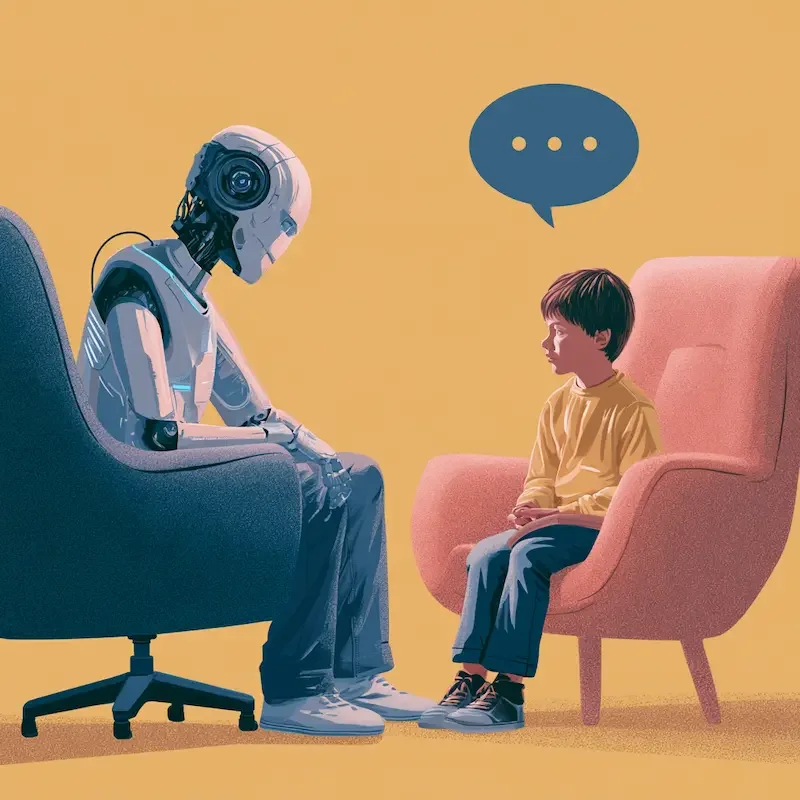
To be fair, AI tools fill real gaps. They're useful for journaling prompts, reframing a racing thought at midnight, or practicing what you want to say before a hard conversation. Apps built around AI can track mood patterns over weeks and surface them in ways that help between sessions. For someone not ready to sit across from another person yet, typing to a chatbot can be a low-stakes first step.
But that support is not a replacement for real therapy. For someone without insurance, in a mental health care desert, or stuck on a waitlist, being able to vent to something that responds instantly is better than nothing. Chatbot tools work best as a supplement for people already in treatment, not a substitute for it.
What AI Can't Replace
A central aspect of all therapy is the relationship between you and your therapist. That relationship is the arena in which growth happens, within it, you can safely test new ways of relating to people, make mistakes, and be met with trust and understanding instead of judgment. A chatbot cannot recreate that arena, no matter how fluent its language sounds. It can reflect your words back to you and give you real suggestions but there is no real relationship to grow inside of.
A chatbot doesn't know you. It can't notice that your voice tightens when a certain subject comes up, or that you've described the same conflict three different ways without seeing the pattern yourself. It can't sit in silence with you, call you out when you're avoiding something, hold you accountable over months, or reflect on your growth over time. It doesn't have an ongoing relationship with you, just a transcript.
There's a darker risk, too. A chatbot can give harmful advice or miss signs of crisis, and some users have confused AI companionship with real human connection, losing touch with reality in the process. AI also can't take responsibility. There's no license on the line, no supervisor to call, no one who can intervene in an emergency. A human therapist is trained, licensed, and legally and ethically bound to respond when someone is at risk. An algorithm optimized to keep you engaged is not.
The Verdict
AI isn't going to replace therapy, but it can offer real support in a hard moment, or alongside the work you're doing in treatment. Used thoughtfully, it can be a bridge, something to help you put words to what you're feeling until you're ready for the real work of healing, which still happens between people.
That human exchange is the point. In therapy, you don't just talk about your patterns, you watch them play out in real time with someone who can gently call them out and support you through the discomfort of change. That's something no app, however sophisticated, can offer.
If you've been leaning on an app or a chatbot to get through hard days, that's not a failure, it's a sign you're ready for more support, not less. Reach out to schedule a consultation with one of our therapists and find out whether Aldea counseling for trauma therapy is the right next step for you.